You’ve been researching hair transplants for months. You’ve seen the amazing results online. But somewhere in the back of your mind, there’s a nagging doubt.
Is hair transplant safe? What if something goes wrong?
Fair questions. You’re talking about a medical procedure. You should be cautious.
Let me give you the honest, evidence-based answer about hair transplant safety – no sugar-coating, no scare tactics, just the facts.
Is Hair Transplant Safe?
Yes, Hair Transplant Surgery is safe when conducted by a skilled and experienced surgeon at a reputable medical institution.
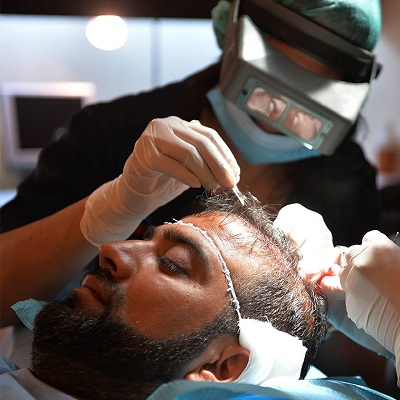
The technique has been done for decades. Modern procedures, such as FUE (Follicular Unit Extraction), have made it even safer, with fewer issues and quicker recovery times than previous approaches.
Why Hair Transplants Are Considered Safe
Let me explain the reasons this procedure has such a good safety record.
- It’s performed under local anesthesia. You’re awake. You’re not under general anesthesia, which carries its own risks. Just numbing injections, same as at the dentist.
- It’s minimally invasive. FUE involves tiny punctures, not large incisions. No cutting muscles. No removing ribs (yes, that’s a thing in some other surgeries). Just small holes in your scalp.
- It uses your own tissue. There’s no risk of rejection because you’re not implanting anything foreign. Your body already accepts your own hair follicles.
- It has decades of refinement. Surgeons have been doing hair transplants since the 1950s. Today’s techniques are light-years ahead of the old “doll hair” plug method.
- Complication rates are low. Major complications occur in less than 1% of cases when performed by qualified surgeons.
Safety Comparison of the Two Main Techniques:
Follicular Unit Extraction (FUE) Individual follicles are removed using a small punch (0.7-0.9mm). No scalpel. There are no stitches. The bleeding was minimal. Reduced infection risk. Faster healing.
FUT (Follicular Unit Transplantation) involves removing a strip of skin from the back of the skull. Requires stitches. Longer recuperation time. Linear scar. Still safe yet more intrusive.
Most surgeons now choose FUE since technique is safer, has fewer problems, and does not leave a linear scar.
Common Side Effects (Not Complications)
Let me distinguish between normal side effects and actual complications.
- Normal, expected, temporary:
- Mild swelling of the forehead (2-4 days)
- Redness around grafts (1-2 weeks)
- Tiny scabs that fall off (7-10 days)
- Numbness in donor area (weeks to months)
Genuine Risks – What Can Actually Go Wrong
Let me be transparent. These are the real risks.
Infection. Any procedure that breaks the skin can get infected. Rate: less than 1%. Prevention: sterile technique, antibiotics before surgery, proper aftercare.
Bleeding. Minimal with FUE. Patients on blood thinners have higher risk. Stop blood thinners before surgery (with your doctor’s approval).
Poor growth. Some grafts don’t survive. Average survival rate is 90-95%. Factors: surgeon skill, graft handling, aftercare, your biology.
Unnatural appearance. Placed at wrong angle, wrong direction, wrong density. This is a skill issue, not a safety issue. Choose your surgeon carefully.
Cobblestoning. Raised bumps around grafts. Rare with good technique.
Who Is not a Good Candidate?
Hair transplant is not safe for everyone.
Uncontrolled medical conditions. Diabetes, heart disease, bleeding disorders – these increase risk. Your medical conditions need to be stable before surgery.
Active scalp conditions. Psoriasis flare-ups, active infections, uncontrolled seborrheic dermatitis – treat these first.
Very young patients (under 25). Hair loss pattern isn’t stable yet. You could lose more hair behind the transplant.
Patients with unrealistic expectations. Not a safety risk, but a satisfaction risk. Be realistic about what a transplant can achieve.
Smokers. Smoking dramatically impairs healing. You need to stop – at least temporarily – for grafts to survive.
Recovery:
Most of the time, recovery is smooth. But here’s what you should monitor.
Signs of infection:
- Increasing redness (not decreasing after day 2)
- Yellow or green discharge
- Fever
- Spreading warmth around grafts
- Increasing pain after day 3
Signs of poor healing:
- Grafts falling out with bleeding (normal shedding is without bleeding)
- Persistent open sores beyond 10 days
- Excessive crusting that won’t resolve
- If you notice any of these, call your surgeon immediately. Don’t wait.
Book us!
Book an appointment at our clinic to learn the answer if Is Hair Transplant Safe? You can fill out the form or call us on the number.