Tired of dealing with persistent back pain? What if your own blood contained the secret to healing? PRP (Platelet-Rich Plasma) therapy uses concentrated growth factors from your blood to heal injured discs, ligaments, and joints.
No surgery, no synthetic drugs—just your body’s natural healing power targeting the source of your discomfort.
What Is PRP?
PRP stands for Platelet-Rich Plasma.
Your blood contains platelets – tiny cells that are the first responders to injury. When you cut yourself, platelets rush to the scene and release growth factors. These are like construction foremen who direct your body to rebuild damaged tissue.
PRP takes this natural healing process and supercharges it.
Here’s how. A small amount of your blood is drawn – 30-60 milliliters, about two to four tablespoons. That blood goes into a centrifuge, a machine that spins it at high speed.
The spin separates your blood into layers. Red blood cells sink to the bottom. Platelet-rich plasma rises to the top.
This concentrated plasma has 5 to 10 times more growth factors than regular blood.
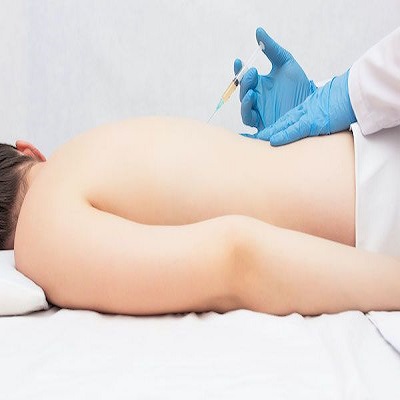
Your doctor then injects this plasma into the source of your back pain – the discs, the facet joints, the ligaments.
How Does PRP Work for Back Pain?
The below is the process explained:
Chronic back pain isn’t always about structural damage. Often, it’s about inflammation that won’t quit. Your body is stuck in a cycle of injury, inflammation, and more pain.
Steroids break that cycle temporarily – by suppressing inflammation. But they don’t heal anything. They just mask the problem.
PRP does the opposite. It amplifies your body’s natural healing response.
When PRP is injected into a damaged disc or ligament, those concentrated growth factors attract stem cells to the area. Stem cells are like raw building material. They can become new ligament tissue, new disc cells, new blood vessels.
Over weeks and months, your body actually repairs the damage. Not masks it. Not numbs it. Heals it.
This is why PRP is called “regenerative medicine.” You’re not just treating symptoms. You’re regenerating tissue.
What Does PRP Treat?
Let me be specific about what PRP can actually help.
Discogenic pain – damaged discs between your vertebrae. These are a primary source of chronic lower back pain.
Facet joint syndrome – arthritis in the small joints of your spine.
Sacroiliac joint dysfunction – pain where your spine connects to your pelvis.
Ligament or tendon injuries – torn or strained tissues supporting your spine.
Muscle tears – chronic injuries that won’t heal on their own.
PRP works best for soft tissue injuries and mild to moderate disc degeneration. It’s not for everyone, but for the right patient, it’s life-changing.
The PRP Procedure – What Actually Happens
The below is the procedure:
Step 1: Consultation
Your doctor reviews your medical history, examines your back, and reviews your MRI. Not everyone is a good candidate. If your discs are completely collapsed or you have severe arthritis, PRP may not help.
Step 2: Blood Draw
A nurse draws about 30-60ml of blood from your arm. Same as any routine blood test.
Step 3: Centrifugation
Your blood spins for about 15 minutes. This separates the platelet-rich plasma from other blood components.
Step 4: Imaging Guidance
Using ultrasound or fluoroscopy (live X-ray), your doctor guides a thin needle to the exact source of your pain. This precision is critical. PRP injected into the wrong spot won’t help.
Step 5: Injection
The concentrated PRP is injected into the damaged disc, joint, or ligament. You might feel pressure, but the procedure itself is quick – about 10-15 minutes of actual injection time.
The Results Timeline
Let me set realistic expectations.
Week 1: Your back is sore. Maybe more pain than before the injection. This is normal. Your body is responding to the PRP.
Week 2-3: The soreness subsides. You notice your morning stiffness isn’t as bad.
Month 1: Significant improvement. You’re moving better. Sleeping better.
Month 3: Maximum results for most patients. The tissue has had time to regenerate.
Month 6: Continued improvement as collagen continues to rebuild.
1 year later: Many patients maintain their results. Some need a second injection.
Most patients need 1-3 injections spaced 4-6 weeks apart for optimal results. This isn’t a one-and-done treatment.
PRP vs. Steroid Injections
Let me compare your options
Steroid injections: |
PRP injections: |
| Work within days
Reduce inflammation temporarily Don’t heal anything Can weaken tissue over time Limited usefulness after 3-4 injections Cheaper per injection |
Take 4-6 weeks to work
Amplify natural healing Actually repair damaged tissue Strengthen tissue over time Can be repeated as needed More expensive upfront |
PRP vs. Surgery
This is where PRP really shines.
Back surgery is not easy. Fusion surgeries involve rods, screws, and months of recovery. Even minimally invasive procedures come with risks – infection, nerve damage, failed back syndrome.
PRP avoids all of that.
No hospital stay. No general anesthesia. No metal hardware in your spine. No months of lifting restrictions.
But PRP isn’t for everyone. If your disc is completely collapsed or you have severe spinal instability, surgery may still be your best option.
For mild to moderate degenerative disc disease? PRP is absolutely worth trying before going under the knife.
How Much Does PRP for Back Pain Cost in Saudi Arabia?
In Jeddah and Riyadh, PRP injections for back pain typically cost between SAR 2,500 to SAR 5,000 per injection.
Most insurance does not cover PRP. It’s considered experimental for back pain. You’ll likely pay out of pocket.
Is PRP for Back Pain Worth It?
Here’s the honest answer.
If you’ve tried physical therapy, medications, and steroid injections without lasting relief, PRP is absolutely worth considering.
If you’re facing surgery and want one last option before going under the knife, PRP is a smart investment.
If you have mild to moderate disc degeneration or ligament damage, PRP is likely to help.
If you’re looking for a miracle cure for severe, multi-level disc disease or spinal instability? You might be disappointed.
The best candidates are patients who still have decent disc height and joint space – but have persistent pain that won’t go away.
Conclusion:
PRP won’t fix every back problem. It’s not magic. It won’t regrow a completely degenerated disc.
But for millions of people with chronic, nagging back pain that won’t respond to conservative care – PRP offers something unique. Healing. Not masking. Not numbing. Actual tissue repair.
Ahmed, the patient I mentioned at the beginning? He got two PRP injections, six weeks apart. A year later, his pain hasn’t returned.
He’s not running marathons. But he’s playing with his kids. Sleeping through the night. Living his life without constantly thinking about his back.
That’s what PRP can do.
Book us!
Ready to see if PRP is right for your back? Book a consultation at an Aesthetic clinic Jeddah with a regenerative medicine specialist. They’ll review your MRI, examine your spine, and tell you honestly – whether you’re a good candidate or better off with surgery.